Faster, snappier greetings
- We now begin generating the opening greeting while the phone is still ringing, so callers hear a response within a fraction of a second of connecting.
- Intent detection is quicker too. When a caller's reason for calling shifts mid-conversation, the AI re-evaluates and switches scenarios faster than before, so the conversation stays on track without lag.
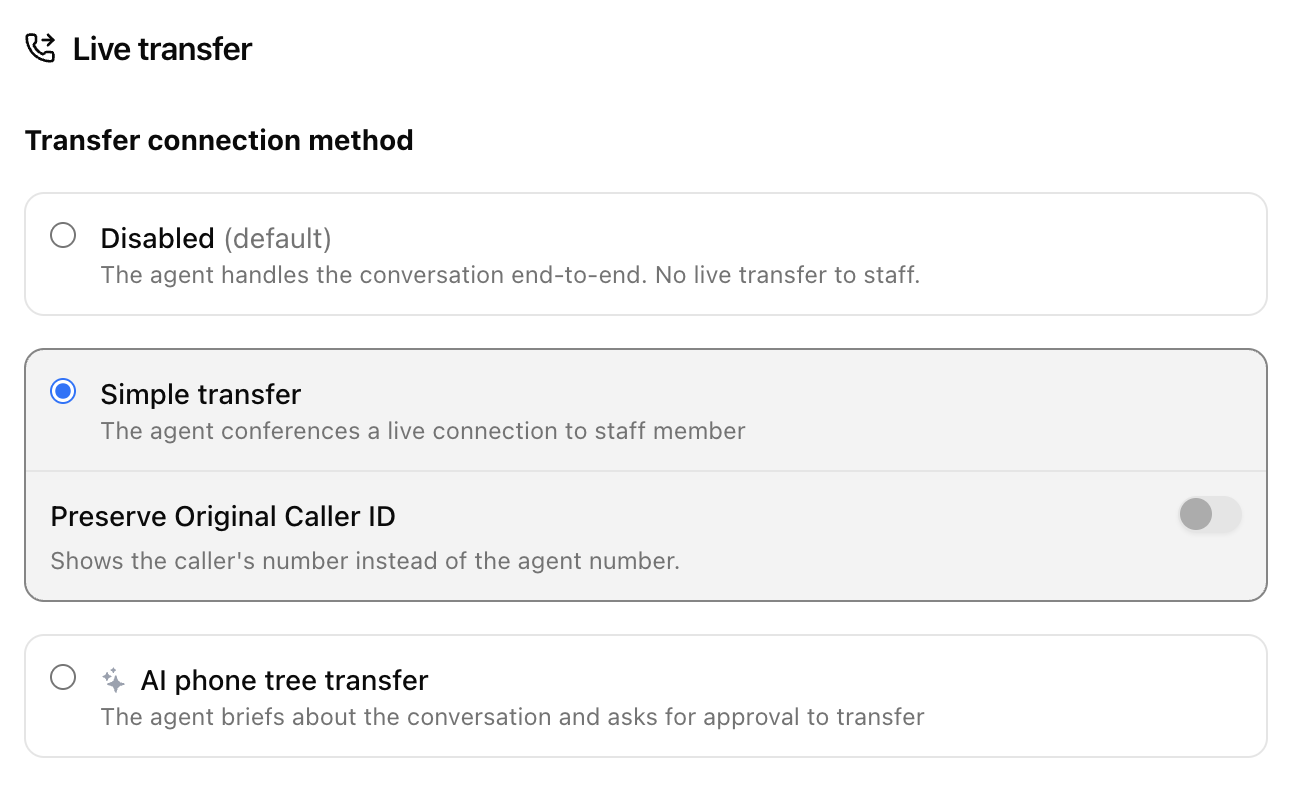
Transfer settings expand
- New settings for simple transfers: You can set which caller ID gets passed on transfers, whether your agent's ID or the original caller. This also helps with unrecognized callers going to spam filters.
- Notification recipients get de-duplicated at handoff action, so if roles have shared staff, the handoff action will notify the staff member once.
Improvements to property matching
- Integration updates for time zones and property matching have been added.
- Smarter logic for property matching when there are similar property names or addresses. The AI is now more cautious when multiple properties share similar names, reducing the chance of confidently routing to the wrong one.
Channel settings improvements
- See your company email and phone under Settings / Channels.
Under the hood
- Outbound voice runs with extra power. With increasing volume of outbound calls, we doubled the outbound voice agent's capacity and added saturation alerts, so high-volume campaigns stay responsive and any pressure on the system gets flagged before it becomes a problem.
- Cleaner meta summaries on property-heavy calls. We tuned how the AI listens for unit numbers, property names, and dollar amounts — the things that matter most when reviewing what happened on a call.
- Minor speech-to-text improvements to reduce inaccurate transcription of filler words, like ums and ahs.
- Security and dependency updates across voice agents and core services.